
Over the past year I've had a lot of conversations with founders and marketing leads about their AI plans. All over the map on industry and team size. And almost every conversation converges on the same exact pattern.
They're shopping for agents.
They want a cold email agent, a content agent, a research agent, a support agent. They're collecting them the way people used to collect SaaS tools. And when you ask them what the agent is supposed to know about the business before it starts acting, there's this pause. You can hear them realizing they haven't thought about it yet.
That pause is the click moment for me. I've heard it so many times this year it's basically become the background hum of every AI conversation I have.
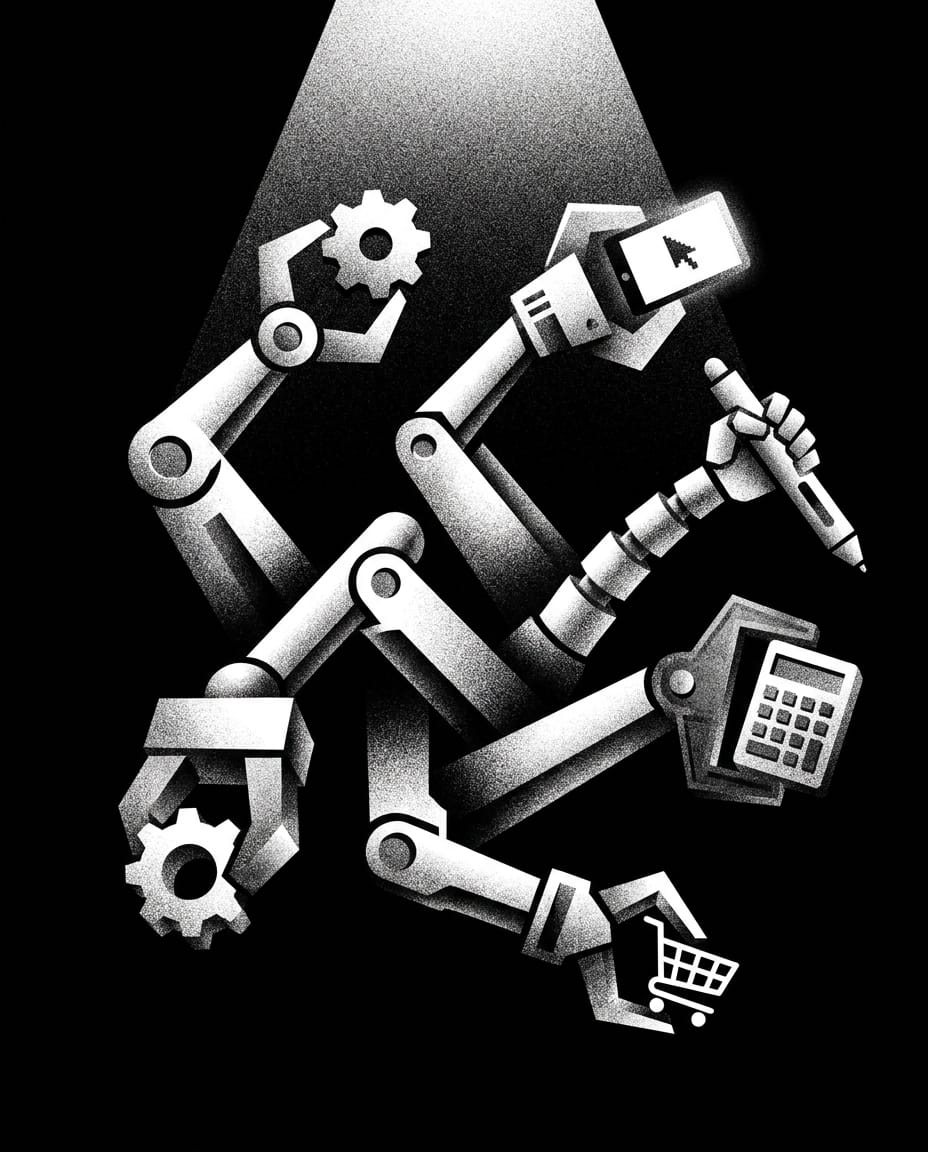
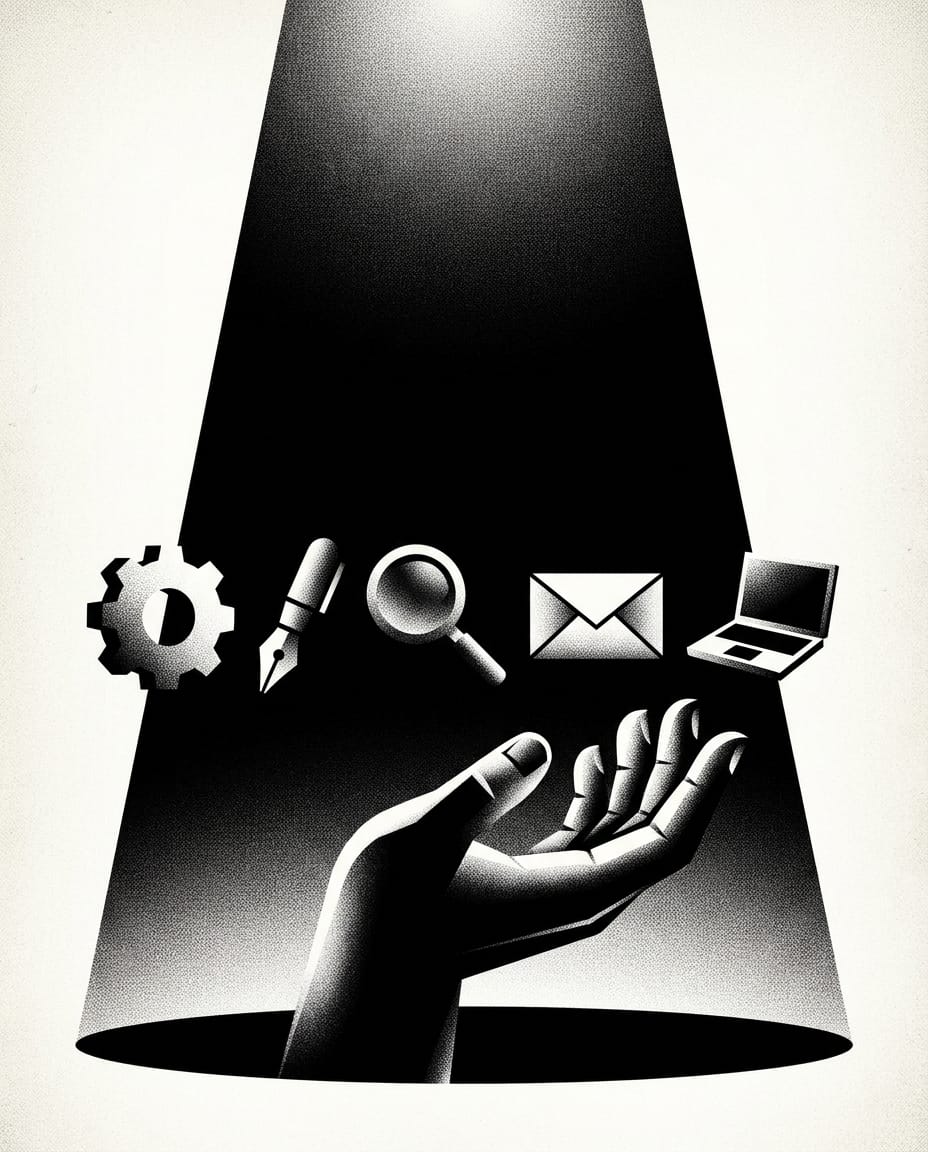
Because the agent isn't the thing. The agent is the hand. What everyone's missing is the brain the hand is connected to.
The thing nobody's building
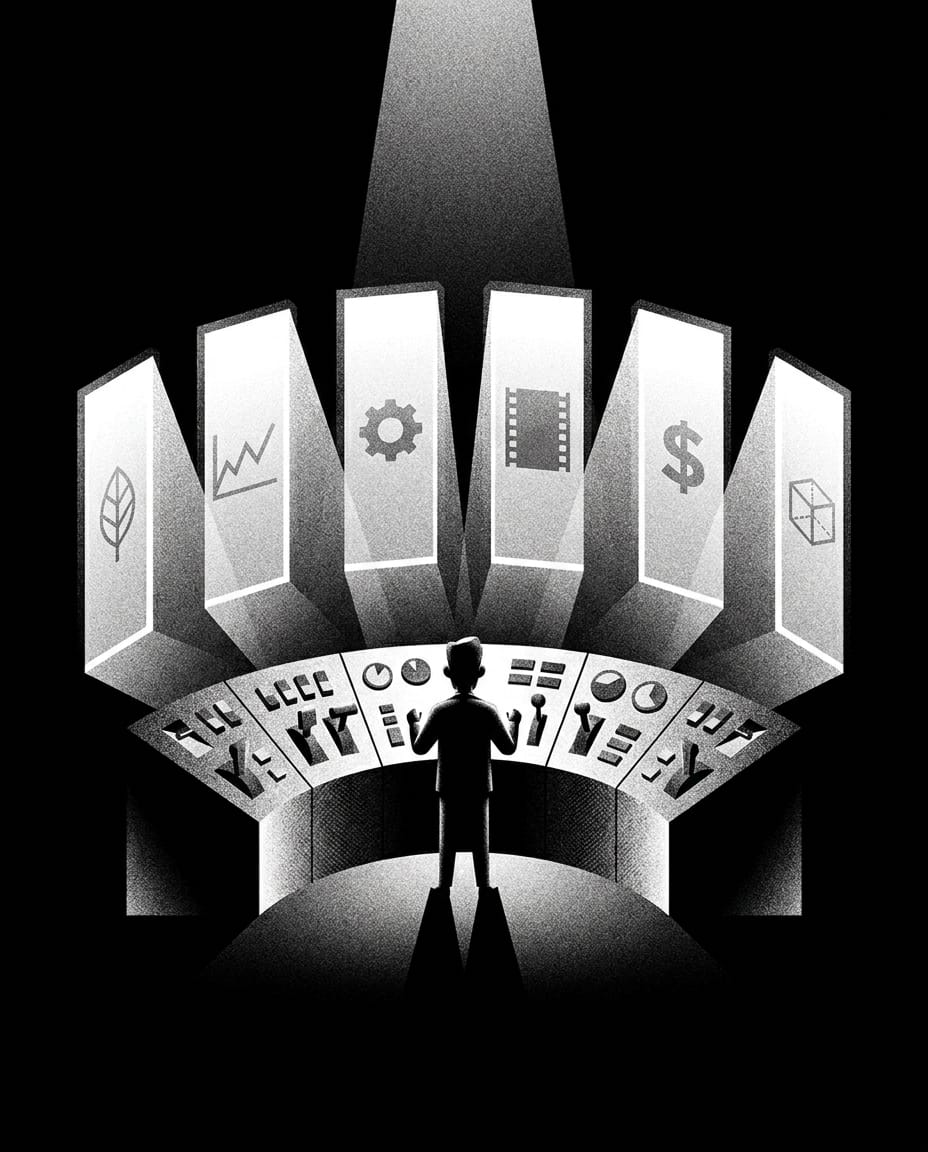
I run six departments as one person. Marketing, sales, operations, content, finance, product. Not a productivity-savant thing, and not a hustle thing either. I spent most of 2025 building a digital twin of my business, and the twin does most of the work the six departments would otherwise do.
Here's the distinction, and I think it's the single most important one anyone should be holding in their head for 2026.
Agents execute tasks. A digital twin holds the identity.
Identity is your brand voice, your strategy, your customer, your pricing, your SOPs, the last five decisions you made and why. It's the stuff that makes a business specifically yours instead of a generic template. And until the twin exists, every agent you plug in is just running off its own assumptions, which is kind of a polite way of saying it's making stuff up.
That's why people who stack agents without the twin keep getting this weird output. Content that kind of sounds like them but also kind of doesn't. Sales replies that are technically correct but off-voice. Ops agents that do the thing you asked but in a way that breaks something three steps downstream. They feel the friction, they don't know what it is, and they usually respond by adding another agent to try to fix it.
Which is how you end up with the shadow-IT version of your own business. A pile of agents, none of them aware of each other, none of them aware of you.
What I actually mean by a twin
A digital twin isn't some mystical construct, per se. It's a set of artifacts that let any agent, any hire, or any future version of you, act the way you would act. Said differently, it's your business's operating system captured in a form that software can read and execute against.
The artifacts I care about:
- Brand voice, extracted properly and stored somewhere your agents can read it.
- Customer definition. Not a persona deck. More like a one-pager of who you sell to and why they buy.
- Pricing logic and offer architecture.
- SOPs for the five or six things you do every week.
- Decision memory. What you tried, what worked, what you killed.
- The metrics that actually matter to you, not the ones a dashboard thinks should matter.
Once that exists, agents become useful. You point an agent at the voice file, the customer file, and whatever task is on deck, and it produces something that sounds like you instead of something that sounds like a polite intern on their second day.
This is why, when I watch companies keep buying agents, I usually know exactly what's about to happen. They'll get the initial dopamine hit of automation. Then the output will start drifting. Then they'll blame the model or the prompt. The actual problem is that there's no identity layer for the agent to sit on top of. You're asking it to be you without telling it who you are.
The 40,000-foot view
Here's how I'd frame 2026 as plainly as I can:
The last three years were about making AI powerful. The next three are about making AI coherent.
Powerful is cheap now. Any founder can spin up a pretty capable agent in an afternoon. The differentiation is no longer "do you have AI," it's "does your AI know your business." Which is the twin question.
If you don't build the twin, you're going to end up with a lot of motion and not a lot of compounding. Every new agent will be a one-off. Every week will kind of feel like you're starting over. The team you thought you'd never need to hire starts creeping back in, because somebody has to keep the agents on-brand, and that somebody is you.
If you do build the twin, the opposite happens. Each new agent you add starts from a shared context. The work compounds. You start being able to run roles you'd never have staffed.
That's the six-departments-one-person thing. A design choice, not a flex. I invested in the twin instead of the headcount.
How this actually runs, inside one department
Take marketing, since it's the most legible one.
My marketing department is a content OS. Two halves. Ideation on one side, production on the other.
The ideation half I call ContentRadar. It watches my feeds, pulls patterns from what's working in my niche, and runs a pulse-check on the market. Then it returns ideas ranked by how close they are to my actual voice and audience. The kind of ideas I'd actually pick, not generic feed filler.
The production half, Content Autopilot, turns a picked idea into the actual asset. Script, voiceover, visuals, cuts, the whole thing. Then it hands off to distribution, which posts to Instagram, TikTok, YouTube, and the community, each with the slight variation the platform wants.
What makes the whole thing work isn't the tools. The tools are kind of interchangeable. What makes it work is that every step reads from the same identity file. Same brand voice. Same customer definition. Same "would Jens actually say this" test.
You can pull out any individual agent and swap it for a better one next month, and nothing downstream breaks. Because the identity is the constant. The agents are the variable.
If I tried to run this department without the twin, I'd need a content strategist, a copywriter, a video editor, a social manager, a community lead. Instead, I steer. I kill ideas I don't want, I approve the ones I do, and I adjust the identity when I notice the output drifting.
That's the work now. Steering the twin. Not doing the tasks.
What I'd do differently if I were starting today
If I were going back to the beginning of 2025 knowing what I know now, I would not have started by building agents at all. I'd have started by building the twin. Seriously. Before the content pipeline, before the CRM integration, before any of the fun stuff.
I would have spent the first two weeks just doing brand voice extraction, customer definition, and SOP writing. Boring work. The most valuable work.
Then I'd have slammed agents in there on top, and honestly I think the whole thing would've moved twice as fast. The reason it took me most of a year is that I kept rebuilding agents whenever I discovered a new piece of identity they didn't know about. Every drift was a signal. Every correction was a note that belonged in the twin the first time around.
That's a mistake I keep watching companies make right now, which is also why I'm writing this. You don't need to take the long road. The shortcut is: twin first, agents second.
What I'd tell you if we were talking over coffee
If you're a solo founder, a small team, or a bigger team with a leader who wants to move fast, the real move in 2026 isn't to buy more agents.
It's to sit down for a week and build the twin. Brand voice. Customer definition. SOP library. Decision memory. Metrics that matter. The unsexy layer underneath the thing everyone's excited about.
After that, the agents become useful. Before that, they're mostly expensive noise.
And I think the companies that figure this out in the first half of 2026 are going to end up looking very different from the ones still stacking agents in the second half. Not because they adopted AI sooner. Everyone's adopting AI. Because they adopted it coherently.
You get to choose which one you're building.