Updated July 21, 2026
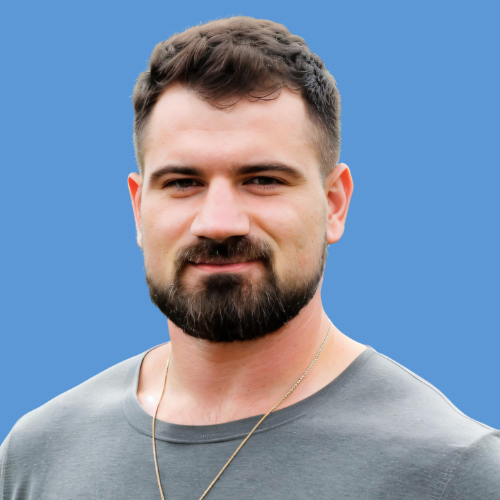
This biography started as a voice recording I made, transcribed and cleaned up. (If writing is hard for you like it is for me, talk first and edit after. It works.) It covers my core philosophies, my upbringing, and the winding path of my career so far. Consider it a good way to get to know the driving forces behind Jens Heitmann.
Who Am I?
I run on a few basic rules. There's what I call the "Golden Touch." Every time I interact with someone, I want them to walk away better than before. Maybe it's a compliment, an idea, or just something useful. Then there's my "Thousand-Year Plan." I make decisions like my great-great (times nine) grandkids will feel the ripple effects. Sounds dramatic, but the long view keeps me focused.
I'm also obsessed with freedom, probably because I've dealt with too much arbitrary authority over the years. People tell me I'm reliable, supportive, and charismatic, which is funny because I see a lot of my goals and efforts as pretty selfish. Things only I can and want to accomplish.
Finding My Own Path
School was interesting, looking back on it. I could hang with anyone: the kids playing pretend fantasy and debating weird internet stuff, the popular sports crowd, the artsy creatives. Didn't matter. I was always soaking up information.
Patterns came easy to me, socially and academically, so I could coast through school without grinding too hard. That actually got me in trouble once when I was very young. A teacher asked me to show my math work and I proudly said "I don't do work." I thought I'd be praised for connecting the dots in my head. I got a lecture and a timeout in the hallway instead.
I was capable enough. I took AP classes and picked up tech certifications like CompTIA. But my ADD made focusing on subjects that bored me nearly impossible, so I became a master of deadline-driven productivity, procrastinating until the pressure forced me to tackle anything difficult.
Reading was the exception. I devoured fiction and could visualize stories like movies in my head, which let me read incredibly fast. Harry Potter, Mistborn, Ranger's Apprentice, The Hobbit, the Percy Jackson series. I burned through everything. Non-fiction was far harder since it lacked that story flow.
School felt more like general exposure than finding something I was truly passionate about. I wasn't attached to socializing back then, maybe from moving around so much as a kid.
Around 13 or 14, my inner tech nerd emerged. I was hacking PlayStations, reverse-engineering programs, and building custom Call of Duty game modes in MW2, all self-taught from online forums. Logic made sense to me, so coding and cybersecurity seemed like the natural path out of high school. Maybe even government work, since I had some family connections.
That path hit a brick wall during a cybersecurity internship in DC around 2017. The commute was two hours each way. When a VP offered rare work-from-home days for anyone driving over an hour, my team leader denied my request. No real reason, just "I want you in the office." Looking back, it was pure hazing.
That arbitrary power play from someone I didn't see as superior (except in age) crystallized something fundamental: my freedom isn't negotiable. My livelihood, health, and mental state can't depend on someone else's mood. The idea that my wellbeing could be at risk because someone had a bad morning felt pathetic.
College didn't help. I was pursuing computer science but barely showed up to one class and never turned in assignments, yet I'd still discuss concepts with the professor when I was there. I expected to fail. He gave me a C. His reasoning: "You know your stuff."
It hammered home that relationships often matter more than systems or merit. Traditional learning felt disconnected from real-world success or the life I wanted, and my motivation disappeared.
The breaking point came on the metro to campus. One day like any other, the train reached my stop, everyone got off, and I stayed. Rode back and forth until security asked me to leave. I stopped going to classes entirely.
I had also just walked away from a corporate job, so I was at a low point. For a couple of weeks I kept up appearances for my family: leaving the house each morning, spending nine hours in my car outside the local gym, sleeping, researching, working out, then coming home like I'd had a normal working day.
It was rock bottom mentally, but sometimes you need that catalyst.
The Entrepreneurial Road: Sales, Spite, and Self-Reliance
My entrepreneurial journey started with spite and a desperate need for freedom. I realized I needed to master the people-centric world I'd been avoiding, so I deliberately sought out friction.
Forging Interaction
I took a sales job at a car wash. Intentionally stressful, because growth requires discomfort and I was a heavy introvert.
During the car wash stint, I met Nicholas Alexander (Nick). He saw something in me that I couldn't see yet. The first time we talked, he said, "I don't know what you're doing here, but you've got juice." I had no clue what that meant then, and it took me years to realize it myself. He offered me a spot on his roofing sales team. I turned it down for the time being. We exchanged info but didn't reconnect for about a year.
After the car wash, I bartended at Topgolf (great chain, by the way) to keep building my confidence talking to people and strengthening my social battery.
Roofing Sales, Round 1
About a year later, Nick and I reconnected during a workout and he offered that sales spot again. I jumped in.
Door-to-door roofing sales in Colorado, capitalizing on hailstorms. I'd inspect properties, show homeowners the damage, and navigate insurance claims. Leveraging other people's money, which is a huge sales advantage. I learned incredible sales tactics and the importance of having solid processes.
The biggest challenge was self-motivation. The freedom of being a 1099 contractor could have easily bred laziness, but my hatred of W2 work pushed me forward. Our team hit around $3 million in sales my first year.
I even managed a small team briefly and learned a hard lesson about lending money when a trainee screwed me over for $400. A cheap lesson, really, about identifying people who'll break trust over small amounts.
My relationship with the company, ADHI, ended due to internal drama, but the experience confirmed that relationships are everything.
The Corporate Detour (Snapchat)
I gave the corporate world one more chance through Accenture, landing at Snapchat in SMB marketing. It felt wrong immediately. The pay was low despite colleagues holding advanced degrees, onboarding dragged on for a month before I was fully set up (I was still getting paid, which some would call a blessing, but the empty hours were torture), and the culture felt misaligned.
I tried connecting with coworkers and leadership, but my perspective on the job was different. This was supposedly an SMB sales job with no commission, and the team had endless arbitrary checkpoints. After I voiced some inefficiencies, my boss pulled me aside one day:
"I've got a really well-oiled machine here. I need you to fit in and be a cog. Or not."
Straight out of a bad corporate movie, again. I put in my resignation within a week. The final nail in the coffin for traditional W2 work. Maybe I just got unlucky both times I tried, but I'm glad. Those experiences put me exactly where I am today.
Roofing Sales, Round 2
Nick and I reconnected again and navigated more roofing ventures together. We eventually partnered with Prime Star Property Solutions, where Nick established a residential division for their primarily commercial company.
The first year, 2019 to 2020, was another success. The team hit around $4.3 to $4.7 million. Then COVID hit and payments got delayed. I had $60k to $70k in unpaid commissions when Prime Star shut down their residential arm, citing the pandemic and some embezzlement issues, and declared bankruptcy.
It stung, but it wasn't devastating. I had learned two things. First, the government takes better care of businesses than people. Second, my sales skills meant I'd be fine either way. The experience reinforced my views on money (reinvest in yourself, grow faster than institutions) and self-reliance.
Ironically, during COVID I received way more support through PPP loans as a business owner than individuals got in stimulus checks. Another win for the entrepreneurial path.
Exploration and a Real Estate Detour
Post-COVID, I explored everything: stock trading (appealed to my introverted side but lacked human interaction), solar and fire restoration sales, even training as an asbestos inspector. I failed that test by one question, though I charmed the instructors into passing grades on the coursework. More proof that people trump systems.
That led to an Account Executive and Operations Lead role with a real estate education company. My first dive into info products and online business operations. I generated $1.8 million in sales solo the first year but only received about a third of my commission before we parted ways.
Again, I didn't chase the lost money. There's a quote from Pirates of the Caribbean I've adapted for myself: "Take what you can, give nothing back." In the movie it has more scandalous intentions. For me it means take everything you can from every circumstance you find yourself in, especially the lessons, and regardless of the outcome, never give back your peace of mind.
Nulight and the Bet on AI
All of that led to my own venture: Nulight. I started with AI automation, leaning on my tech background, and secured retainers and projects through my network. Landing a major client let me blend sales and AI implementation while genuinely helping other businesses, and success snowballed into more clients and a fractional executive practice. I'd partner with companies ready for significant growth, diagnose their operational bottlenecks, design scalable systems, and implement them, usually with AI and automation at the center.
Then AI stopped being a feature of my work and became the work itself.
Today I operate as a fractional AI leader. I've held COO seats at AI companies, built and shipped AI products, and driven millions in revenue helping businesses put AI to work in sales, operations, and content. The tech-nerd kid who was reverse-engineering games at 14 and the door-to-door closer who learned people the hard way turned out to be the same person this moment needed.
What I'm Tackling Now
The last two years changed the shape of my work more than the previous ten. Here's the thesis I've landed on: the businesses winning with AI aren't the ones buying more software. They're the ones learning to hire AI like they'd hire a person. Give it a role, real responsibilities, context about the business, and a manager. I spent my twenties making sure my livelihood never depended on someone else's mood. Now I show entrepreneurs how to build companies whose growth doesn't depend on headcount.
I run my own business this way. AI agents build my software, draft my systems, review my work, and run research while I sleep. Most of that runs on Claude Code and OpenAI's Codex, and I'm the architect and final reviewer rather than the guy typing everything by hand. One person, operating like a team. My company is the lab, and everything I publish comes from what actually survives contact with real work.
Where that shows up right now:
Jens AI+ is the community and course library where I teach this. How to properly hire AI into your business, from your first AI hire to full AI departments. There's also a free community if you want to start there.
The Modernpreneur is the newsletter and media brand I'm building with my business partner Joel Rowland, for entrepreneurs leveraging AI properly.
On Instagram and TikTok I document all of this daily for around 80,000 people, with YouTube launching next. And Nulight keeps building AI systems for client companies, which keeps me honest. Teaching without shipping turns into theory fast.
The open question I can't answer yet is how far one person can actually take this. That's the experiment I'm running in public.
Core Philosophy and Future Vision: The Thousand-Year Plan
My driving force remains the "Thousand-Year Plan," guided by my personal "Seven Laws." A framework I built for myself for building a regret-free life. Here are the quick breakdowns of the seven laws I live by:
Experience:
Achieve 1,000 years of wisdom, whether lived or learned from masters.
Finance:
Financially provide for the generations I can physically see in my lifetime.
Ethics/Purpose:
Do as you please, but cause no harm; chase strength but wield power responsibly.
Physicality:
Be physically prepared for any experience (never limited by "can't," only "don't want to").
Spirituality:
Find your divine within; recognize that religions across all cultures point toward inner peace and self-trust ("You are the god of your own world").
World Presence:
Cultivate a global perspective, not confined to one place. Have reasons to travel to and be welcomed around the world.
Relationship:
Still evolving, balancing a long personal journey with partnership.
Jobs and money are just tools; lasting influence on humanity and my lineage is the real goal. Near-term, I'm focused on hitting my first "apex" by age 30: peak physical condition, strong financial footing, a powerful network, and exponential growth from there.
I'm passionate about human growth, biohacking, longevity, philosophy (exploring purpose through absurdism), and self-cultivation (inspired by Wuxia novels).
Reflections
Looking back, my journey feels like a "solo epic." I knew who I was meant to become around age 20, and while I keep growing, that core hasn't changed. But mapping it out shows how crucial connections were at pivotal moments, especially with Nick. My ideal relationships will probably result from my journey rather than drive it, but I need to be more conscious about fostering connections along the way.
One principle from The Alchemist (Paulo Coelho) guides me: when you pursue your true path, good coincidences happen. Life keeps confirming it. Open flight rows, meeting the right people, casual conversations that turn into life-changing opportunities. It tells me I'm on track.
If I had to compress all of the above into one piece of advice: plan like you're going to live forever, and take what you can from every experience, especially perspectives. They're valuable currency.
If you'd like to connect, feel free to reach out: Jens@nulight.io.